


Mini Split Electrical Basics for Breaker Selection
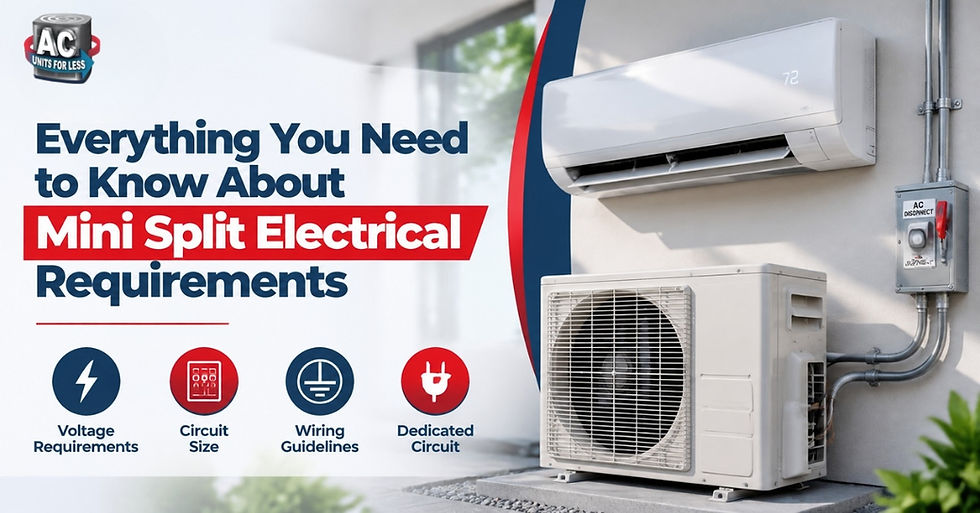
Choosing ductless heating and cooling equipment requires careful attention to more than room size and BTU capacity. Electrical demand, voltage, circuit protection, and manufacturer specifications should also be reviewed so buyers understand the power requirements of the equipment they are considering.
Understanding Mini Split Electrical basics can help homeowners identify important specifications before purchasing a unit. The electrical data for an individual model typically provides minimum circuit ampacity and maximum overcurrent protection information, which should be considered instead of estimating circuit requirements from cooling capacity alone.
Understanding Breaker Selection
One of the most frequent questions during equipment research is what size breaker for mini split units should be considered. There is no single breaker rating that works for every ductless unit because electrical requirements depend on the specific equipment, voltage, capacity, and manufacturer's stated specifications.
BTU capacity can still be useful when comparing equipment because it indicates the unit's nominal cooling output. However, buyers should avoid assuming that moving from one capacity to another automatically results in a predictable breaker or amperage requirement.
When comparing Mitsubishi Mini Split Systems, buyers can review model-specific electrical specifications along with efficiency and capacity information. This provides a more complete basis for comparing available equipment and understanding how individual configurations differ in their electrical demands.
Specifications to Review Before Choosing
Important details to examine include:
Required equipment voltage
Minimum circuit ampacity
Maximum overcurrent protection
Available electrical capacity
Manufacturer-listed electrical requirements
Selecting a mini split system should involve matching the equipment to both the comfort demands of the space and the property's electrical capabilities. Considering these factors together can help homeowners narrow their options before making a purchasing decision.
Breaker Requirements Across Different Capacities
Buyers evaluating larger units often research 24,000 btu mini split breaker size while comparing equipment. Although BTU capacity helps identify cooling output, it should not be treated as the only factor for determining circuit protection because electrical specifications can differ by model.
For medium-capacity equipment, 18000 btu mini split breaker size is another common search. Buyers should check the technical information provided for the exact 18,000 BTU unit they are considering rather than applying specifications from another model.
Homeowners may also ask how many amps does a 18000 btu mini split use when evaluating electrical demand. Amperage can vary based on equipment design, voltage, and operating characteristics, making the manufacturer's data the appropriate reference.
Similarly, 24000 btu mini split breaker size should be confirmed from the specifications of the exact equipment. When electrical compatibility is uncertain, a qualified electrical professional can assess the existing circuit and compare it with the stated requirements.
Make Breaker Planning Part of Product Research
Reviewing electrical specifications alongside capacity and efficiency gives buyers a clearer understanding of their equipment options. Proper research can help ensure that the selected ductless unit aligns with both comfort goals and the property's electrical capabilities.
Comments